
Semi-trailers OEM quotes can look competitive on paper, but finance approvers know purchase price is only the start. Hidden lifetime costs—from maintenance and payload efficiency to compliance risk, fuel impact, residual value, and downtime—can quickly reshape total ROI. Before approving the next trailer investment, it is critical to evaluate where semi-trailers OEM pricing may understate the true long-term cost of ownership.
For fleets operating across long-haul freight, cold chain distribution, municipal services, bulk haulage, and hazardous materials transport, trailer selection is no longer a simple capex event. It is a 7–12 year operating decision that affects utilization, route flexibility, workshop hours, insurance exposure, and resale performance. That is why semi-trailers OEM evaluation must move beyond the factory invoice and into a full lifecycle cost framework.
For financial decision-makers, the practical question is not whether one quote is lower by 3% or 5%. The real question is whether the lower quote creates a higher total cost of ownership after 24 months, 60 months, or the full service life. In regulated commercial transport, small specification gaps can produce large downstream costs.
Why sticker price often distorts the real semi-trailers OEM decision
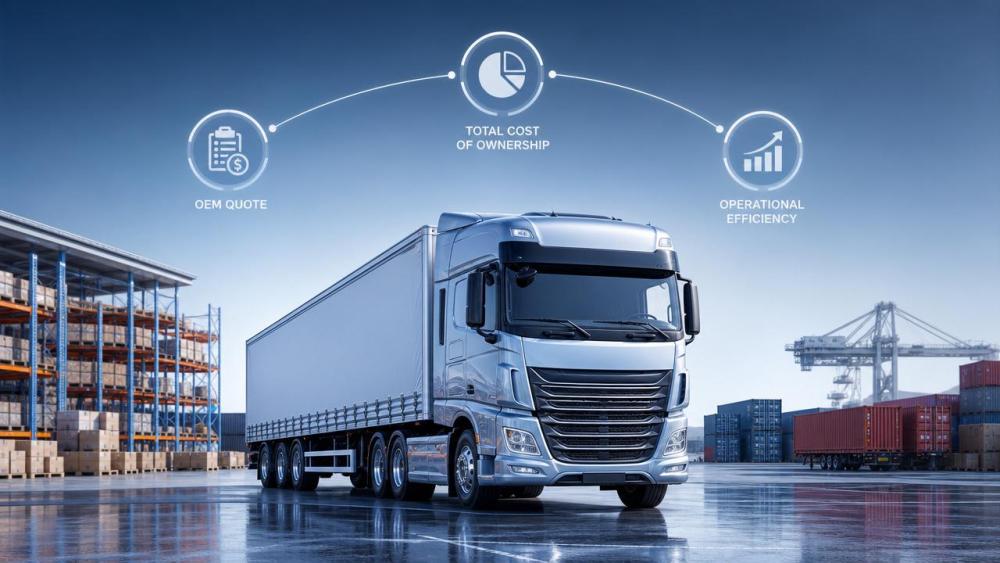
A semi-trailers OEM quotation usually highlights chassis price, optional features, and delivery lead time. What it may not fully reveal is how the trailer performs under actual duty cycles: 80,000–150,000 km per year, frequent loading stress, mixed road quality, and strict compliance checks. Finance approvers need that missing layer before capital approval.
The purchase price is only one cost line
In many fleets, acquisition cost represents only 35%–50% of the total economic impact over the trailer lifecycle. The rest comes from repair intervals, tire wear, brake component life, corrosion resistance, tare weight, fuel drag impact, and the revenue effect of unplanned downtime. A trailer that is cheaper upfront by $2,000 may cost $8,000–$20,000 more over 8 years if the build specification is not matched to the application.
Where OEM quotes commonly understate cost
- Structural fatigue risk from lower-grade steel, thinner cross-members, or insufficient reinforcement at high-stress zones
- Higher service frequency for suspension, landing gear, kingpin, electrical harnesses, and braking components
- Payload loss caused by heavier tare weight, reducing billable tonnage on every trip
- Fuel consumption penalties from poor aerodynamic integration, especially on 500 km+ trunk routes
- Compliance retrofit costs for EBS, underrun protection, conspicuity, ADR-related equipment, or axle load rules
- Longer parts lead times that extend vehicle-off-road days from 2–3 days to 7–14 days
A finance-first lens changes the comparison logic
When procurement compares only line-item price, the evaluation tends to favor minimal specification. When finance compares cost per operating year, cost per payload ton, and downtime-adjusted asset productivity, the ranking often changes. This is especially true for fleets carrying bulk commodities, refrigerated goods, municipal loads, or dangerous cargo where uptime and compliance matter as much as capex.
The table below shows how a seemingly low semi-trailers OEM quote can shift once common lifecycle variables are included in the approval model.
The main takeaway is straightforward: a semi-trailers OEM price comparison without duty-cycle assumptions is incomplete. Finance teams should ask not only what the trailer costs to buy, but what it costs to operate, keep compliant, and eventually replace.
The lifetime cost categories finance approvers should model before approval
A robust review process should break total ownership into at least 6 cost buckets. This approach helps separate a low initial quote from a low long-term cost structure. It also allows better alignment between procurement, operations, maintenance, and risk management teams.
1. Maintenance and parts consumption
Check service intervals for brakes, bushings, air lines, electrical connectors, suspension modules, and landing legs. If one semi-trailers OEM design requires major wear-part attention every 6 months while another can stretch to 9–12 months under the same route profile, the labor and downtime difference compounds quickly across a fleet of 20, 50, or 100 units.
2. Payload efficiency and revenue density
Lightweighting is not a marketing phrase in trailer economics. For dry bulk, containers, flatbeds, or tipper applications, each 100 kg of tare reduction can matter. On high-frequency routes, a 500 kg payload gain may create measurable revenue uplift if axle regulations, cargo density, and utilization rates support full loading. This is one of the most overlooked gaps in semi-trailers OEM price reviews.
3. Fuel and aerodynamic drag impact
Although the tractor consumes fuel, the trailer contributes to drag, rolling resistance, and weight. Side guards, underbody airflow management, rear devices, tire specification, and alignment quality can influence fuel performance. Even a 1%–3% difference becomes meaningful on annual long-haul mileage above 120,000 km.
4. Downtime cost
Unplanned trailer downtime is often treated as an operations issue rather than a finance issue. That is a mistake. If a trailer loses 6–10 revenue days per year due to cracks, brake faults, axle alignment issues, or parts shortages, the economic damage may exceed the original quote advantage. Downtime should be valued using daily contribution margin, not just workshop invoice cost.
5. Compliance and insurance exposure
For hazmat, cross-border, sanitation, and urban-restricted operations, regulation is dynamic. Requirements may cover EBS, roll stability, lighting, side underrun, reflective markings, anti-slosh designs, temperature integrity, or region-specific emission-zone compatibility for associated equipment. A quote that omits future-ready compliance can create retrofit bills in 12–24 months.
6. Residual value and exit timing
A higher-quality trailer often protects value better in years 5–8, especially if service history, structural condition, axle brand support, and corrosion protection are strong. Finance teams should estimate resale or secondary-market transfer value at two points, not one: midlife and retirement. This gives a more realistic depreciation curve.
A practical 6-point approval checklist
- Define annual mileage, load profile, and operating environment
- Compare tare weight and verified payload consequences
- Map preventive maintenance frequency over 12, 36, and 60 months
- Estimate downtime cost per day and expected parts lead time
- Review compliance gaps for target markets and cargo classes
- Model residual value assumptions at year 5 and year 8
How semi-trailers OEM specification choices create hidden cost differences
Two trailers may look similar in a quotation sheet yet behave very differently in service. The cost difference usually starts at the specification level. Finance approvers do not need to become engineers, but they do need visibility into which technical choices affect economics.
Frame and material strategy
High-strength steel and aluminum designs can reduce tare weight, but only if engineering quality preserves fatigue resistance at stress points such as goosenecks, cross-member junctions, suspension interfaces, and rear structures. A poorly optimized lightweight trailer can generate crack-repair cycles long before year 4. A well-engineered one can improve both payload and durability.
Suspension, braking, and axle package
Mechanical suspension may offer lower initial cost, while air suspension can improve cargo protection, road behavior, and tire wear consistency in some operations. Brake system quality, EBS integration, and axle alignment tolerance also influence service cost. On high-speed trunk roads or ADR-sensitive routes, these are financial variables, not only technical ones.
Electrical reliability and telematics readiness
Cable routing, connector sealing, lighting durability, and sensor compatibility matter more than they appear. Recurrent electrical faults can create repeated inspection failures or dispatch delays. If the fleet intends to use telematics for brake health, tire pressure, reefer monitoring, or utilization tracking, integration readiness should be reviewed at order stage rather than retrofitted later.
The next table translates common specification choices into cost implications that finance teams can use during supplier review.
This is why semi-trailers OEM comparison should include an engineering-commercial review, not just a price ranking. The cheapest specification may be appropriate for low-utilization regional duty. It may be the wrong choice for high-cycle, high-compliance, or premium cargo operations.
A better procurement model for finance, fleet, and risk teams
The most effective approval process combines commercial discipline with operating reality. Instead of approving a trailer based on headline capex alone, leading organizations use a weighted evaluation model across 4 dimensions: acquisition, uptime, compliance, and exit value. This gives finance a defensible basis for supplier selection.
Build a weighted scorecard
A practical model may assign 30% weight to acquisition and delivery terms, 30% to maintenance and uptime, 20% to compliance and safety fit, and 20% to payload plus residual value. The exact weighting depends on route intensity and cargo risk, but the discipline matters more than the formula.
Validate with real operating scenarios
Ask each semi-trailers OEM to quote against a real application, not a generic trailer type. For example, specify annual mileage, average load, road condition, climate, maintenance cadence, and whether the unit will serve bulk haulage, refrigerated distribution support, municipal transfer, or hazmat-adjacent duty. Scenario-based quoting reveals cost differences much earlier.
Questions finance should ask before final sign-off
- What is the expected service life under our actual route profile: 5 years, 8 years, or 10 years?
- Which components are most likely to require replacement within the first 24 months?
- What is the average parts supply window: 48 hours, 7 days, or more?
- How much payload do we lose or gain versus the alternative quote?
- What compliance items would require retrofit if regulations tighten in the next 2–3 years?
- What resale assumptions are realistic for this configuration in our market?
Use the supplier as a lifecycle partner, not only a manufacturer
The strongest semi-trailers OEM relationship is one that supports parts planning, maintenance training, specification refinement, and operational feedback. This matters even more as fleets face electrification shifts, smarter telematics, stricter urban restrictions, and growing safety expectations across global freight corridors.
For finance approvers, the right decision is rarely the lowest invoice total. It is the configuration that protects uptime, preserves payload economics, meets compliance without retrofit surprises, and holds value when the asset exits the fleet. In other words, good trailer procurement is not just buying equipment; it is purchasing predictable transport capacity.
If your team is reviewing semi-trailers OEM proposals for long-haul, municipal, cold chain, bulk, or hazardous-duty operations, a lifecycle cost review can prevent expensive approval mistakes. Contact us to discuss your application, compare specification strategies, and get a more decision-ready framework for the next trailer investment.