
In commercial vehicle procurement, bodybuilders sourcing is never just about price or lead time—it is a frontline quality and safety decision. For heavy tractors, refrigerated trucks, municipal sanitation units, trailers, and hazmat transport equipment, the body or upfit often defines real-world durability, compliance readiness, payload efficiency, and maintenance cost. A supplier that looks competitive on paper can still introduce hidden welding defects, poor corrosion control, weak thermal insulation, unstable tank baffling, or incomplete documentation. That is why effective bodybuilders sourcing now requires a structured comparison model that captures both visible capabilities and buried quality risks before they turn into downtime, recalls, or fleet safety events.
Why bodybuilders sourcing is becoming more risk-sensitive across commercial vehicle segments
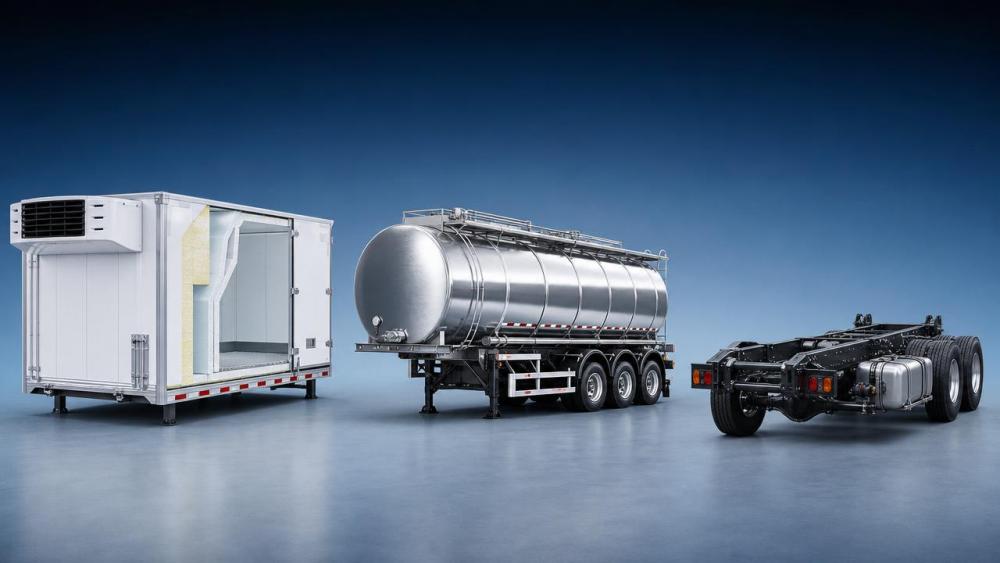
The commercial vehicle market has changed sharply. Electrification is reshaping chassis layouts, urban low-emission rules are pushing lighter and cleaner vehicle bodies, and safety regulations are tightening around cargo retention, insulation performance, rollover stability, and hazardous goods containment. At the same time, fleets increasingly expect longer uptime, better telematics integration, and lower total cost of ownership. In this environment, bodybuilders sourcing has moved from a transactional vendor check to a strategic quality screening exercise.
This shift is especially visible in sectors covered by HTSV intelligence. A refrigerated bodybuilder must now balance thermal performance, battery draw, route density, and sanitation standards. A tanker or hazmat upfitter must prove not only structural strength but also pressure integrity, anti-slosh behavior, and compliance traceability. Trailer bodybuilders face pressure to reduce tare weight without compromising fatigue life. In each case, surface-level quotations tell only a small part of the story, making disciplined bodybuilders sourcing essential for risk control.
The strongest trend signals behind higher quality risk in bodybuilders sourcing
Several market signals explain why supplier comparison has become more complex and more critical. These are not temporary fluctuations; they are structural forces changing how commercial vehicle bodies are specified, built, audited, and maintained.
Where quality risks usually hide when comparing bodybuilders
Many supplier comparisons still focus on visible attributes: factory size, annual output, quoted cost, and delivery commitment. Those matter, but the largest quality failures in bodybuilders sourcing often come from less obvious gaps. One common issue is process inconsistency. A supplier may show strong sample units but lack repeatable welding procedures, dimensional control, or coating thickness management. Another frequent problem is engineering mismatch: the body is built correctly in isolation, but not correctly for the intended chassis, route profile, cargo density, or climate exposure.
Documentation is another blind spot. For insulated bodies, tankers, tippers, refuse bodies, or special trailers, missing test records can be more dangerous than visible cosmetic defects. If the supplier cannot present material certificates, weld traceability, leak tests, insulation test data, braking interface validation, or type-approval support, the apparent savings in bodybuilders sourcing may disappear during homologation, operation, or insurance claims.
High-frequency hidden risks to verify early
- Unvalidated material substitutions in high-stress zones
- Weak corrosion protection for underbody and fastener interfaces
- Poor thermal bridge control in refrigerated body assemblies
- Inadequate baffling or slosh mitigation in liquid transport applications
- Electrical integration issues on new energy vehicle platforms
- Limited field-service support and spare parts discipline
- Incomplete change-control procedures after design revisions
A more reliable framework for bodybuilders sourcing under changing market conditions
The most effective way to compare suppliers is to score them across capability layers, not just headline metrics. Good bodybuilders sourcing should examine engineering depth, production control, compliance evidence, aftersales strength, and application fit. This creates a clearer view of whether a bodybuilder can deliver repeatable quality at scale, not merely produce an attractive prototype.
How these sourcing changes affect different business links
The rising complexity of bodybuilders sourcing affects more than supplier selection. It changes how specifications are written, how prototypes are approved, how acceptance criteria are defined, and how warranty claims are interpreted. If comparison standards remain shallow, engineering teams inherit avoidable design compromises, operations teams face more downtime, and compliance exposure grows across the vehicle lifecycle.
For fleet expansion and cross-border deployment, the impact is even broader. A bodybuilder that performs well in one country may struggle with different axle rules, ADR-related documentation, cold-chain validation expectations, or local repair networks elsewhere. That is why advanced bodybuilders sourcing should connect procurement criteria with operational geography, regulatory pathways, and asset utilization strategy rather than treating body supply as a stand-alone purchase.
Areas most directly affected
- Vehicle specification accuracy and tender competitiveness
- Homologation timing and market-entry readiness
- Payload efficiency and energy consumption
- Maintenance planning and parts availability
- Residual value, warranty cost, and incident exposure
What deserves the closest attention before shortlisting any bodybuilder
To reduce risk without slowing decisions, focus on a small set of proof points that reveal true supplier maturity. The first is consistency: ask whether the supplier can show stable process control across similar builds, not just one successful demonstration unit. The second is transparency: strong candidates in bodybuilders sourcing can explain where key materials come from, how design changes are approved, and what happens when a nonconformance is found. The third is application evidence: demand proof from operating environments comparable to your own.
- Audit the process, not only the product: factory walkthroughs should verify fixture control, weld qualification, inspection flow, rework handling, and storage discipline.
- Test integration assumptions: confirm body-chassis interfaces, wiring logic, axle loads, refrigeration power draw, hydraulic routing, and braking interactions.
- Review failure history: strong suppliers openly discuss recurring defects, corrective actions, and lessons from field returns.
- Validate service depth: warranty performance is only meaningful if spare parts, repair manuals, and regional response are available.
- Score documentation maturity: incomplete records are often the earliest warning sign in bodybuilders sourcing.
A practical next-step approach for safer bodybuilders sourcing decisions
A practical response is to replace broad supplier comparison with a staged evaluation model. Start with a paper-based compliance and capability screen. Then move to a technical review of drawings, calculations, and past application cases. After that, conduct an on-site audit focused on critical process controls and traceability. Finally, use a pilot build or first-article inspection to verify whether documented capability translates into repeatable production quality. This phased method makes bodybuilders sourcing faster in the long run because it cuts late-stage surprises.
For organizations navigating electrification, cold-chain upgrades, lightweight trailers, or high-risk hazmat transport, the key is to compare bodybuilders through the lens of future operating pressure, not yesterday’s purchase habits. The right partner is not simply the one with the lowest quote, but the one whose engineering evidence, compliance discipline, and lifecycle support match the complexity of the job. Build your shortlist around proof, application fit, and repeatability, and bodybuilders sourcing becomes a source of resilience rather than hidden exposure.
As a concrete next move, create a weighted comparison sheet covering design validation, process control, certification readiness, aftersales depth, and field performance. Apply it consistently across all candidates, require documentary evidence for each score, and flag any gap that cannot be verified. That simple discipline can transform bodybuilders sourcing from a reactive purchasing task into a stronger foundation for safety, uptime, and long-term fleet value.